Ella Langley didn’t just have a good ACM Awards night, she turned it into a full-on statement. We’re breaking down the 61st Annual Academy of Country Music Awards from Las Vegas with Shania Twain hosting, Cody Johnson grabbing Entertainer of the Year, and a wave of winners that makes you ask what country music is rewarding right now. We talk through the biggest moments, the funniest bits, and the kinds of wins that feel like the format finally caught up to the fans.
Then we zoom out into the bigger music industry trends behind the headlines. Why does “traditional country” suddenly feel like a flex again, and why does that make some Nashville decision-makers nervous? We also hit a fast music news run across country and rock, including reunion-tour culture, documentary buzz, and the ongoing fight for artist ownership after Avenged Sevenfold regains rights to key recordings. If you care about master recordings, catalog value, and creative control, you’ll want to hear this part.
We keep it interactive with our question of the day: what artist or band had you hooked from the first time you heard them? From Ozzy to Journey to Live and a pile of listener answers, it turns into a real-time map of musical first loves. After that, we rip through the country and rock chart countdowns and finish with trivia night chaos as Tiffany tries to redeem herself against Mark.
Subscribe so you don’t miss the next live hang, share this with a friend who argues about awards shows, and leave us a review. What’s the one artist who grabbed you on the very first listen?
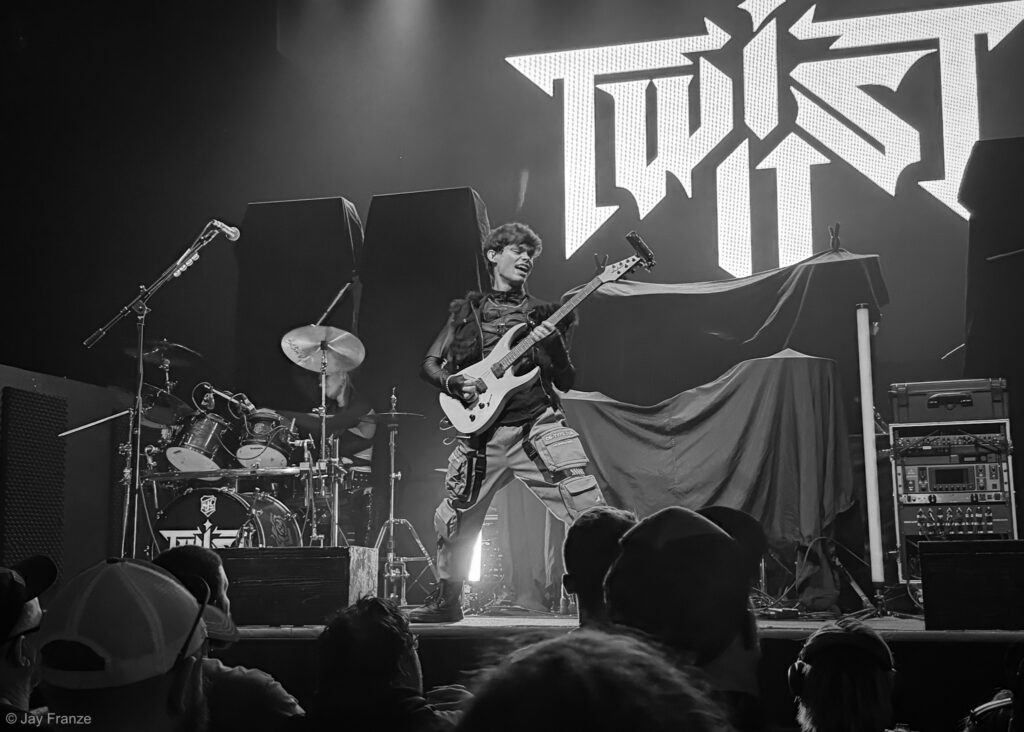
There are bands that sound good on streaming platforms, and then there are bands that walk into a room and prove they belong there. On Saturday night (May 23, 2026) at The King of Clubs, Twist It made it very clear they are no longer “up-and-coming.” They’re arriving.
At a comfortable 75 degrees in Columbus, the scene outside the venue already felt different before a single note was played. Tour buses lined the building while fans wrapped around aging apartment buildings and a long-forgotten theater that once stood beside what used to be one of North Columbus’ premier entertainment destinations. There was something poetic about it, a new generation of hard rock fans gathering in the shadows of a faded entertainment empire.
And honestly? Seeing that kind of line at 6 PM before doors even opened says a lot.
The King of Clubs continues to prove why it has become one of Ohio’s best live music rooms. The 850-capacity venue delivers the kind of intimate chaos rock shows are supposed to have. Multi-tiered sightlines, loud fans, cold drinks, and not a bad spot in the house. It feels personal without feeling small, the perfect setting for a band like Twist It.
For me, this show had been building for a while. I first discovered Twist It a couple years ago and had them on The Jay Franze Show back on November 25, 2024, still one of the strongest interviews the show has ever had. Even then, despite being barely out of their teens, you could tell there was something different about them. They had vision. Confidence. Direction. Most young bands are still trying to figure out who they are. Twist It already knew.
That confidence exploded onto the stage Saturday night.
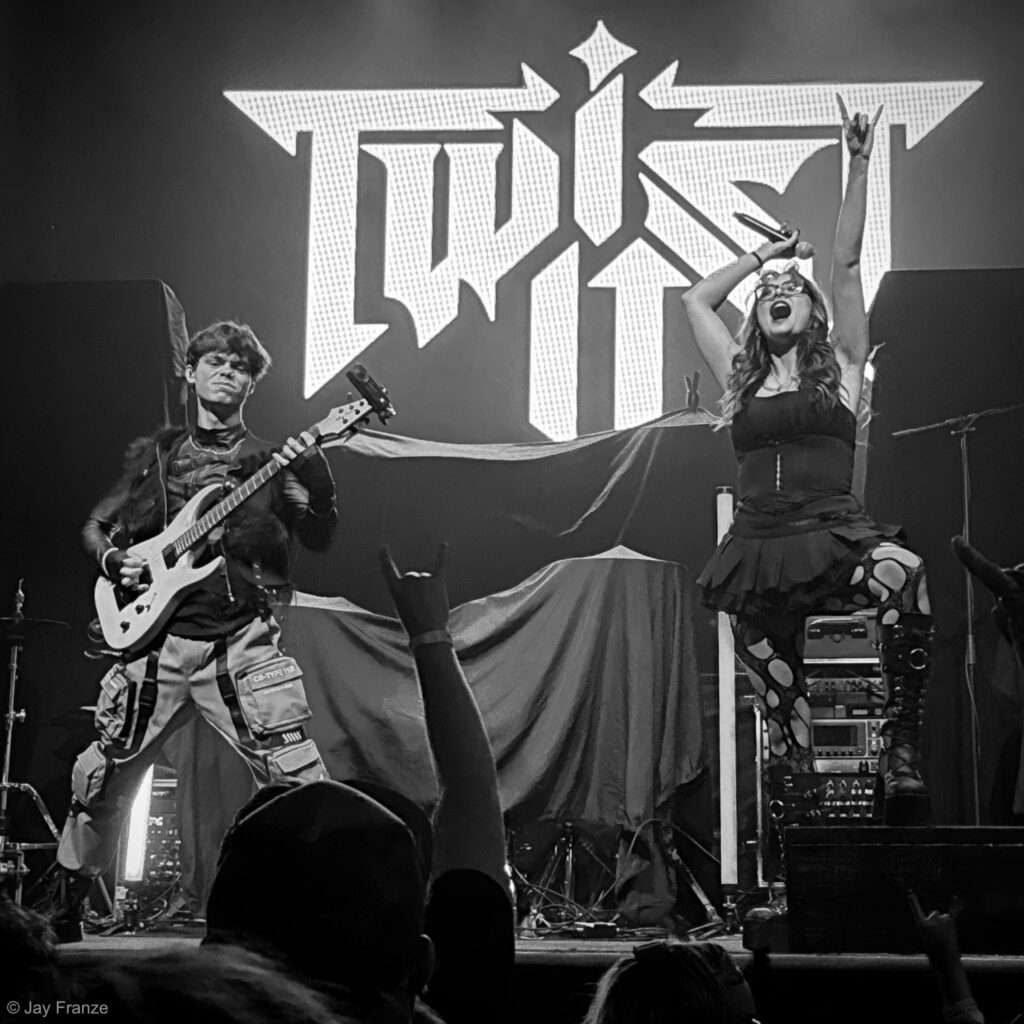
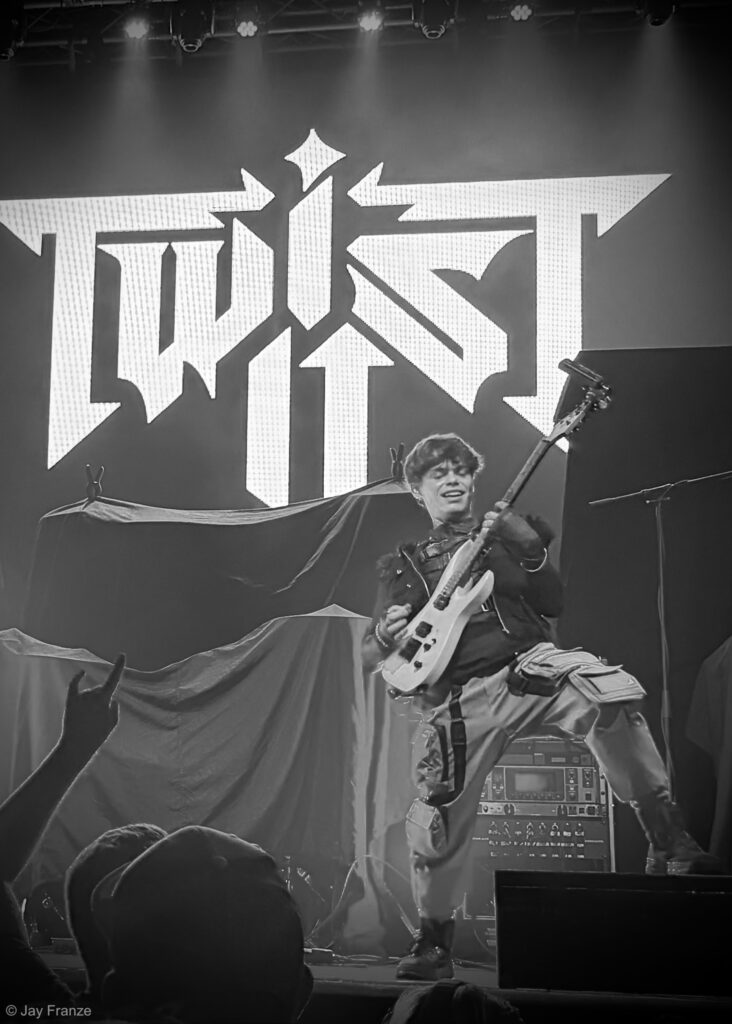
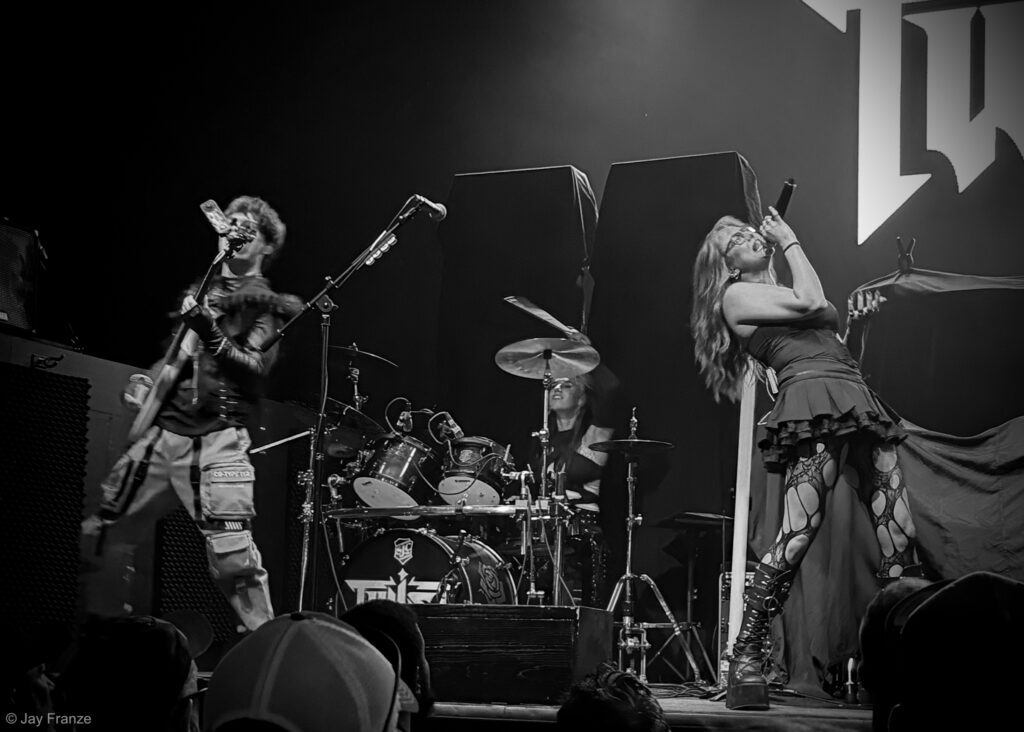
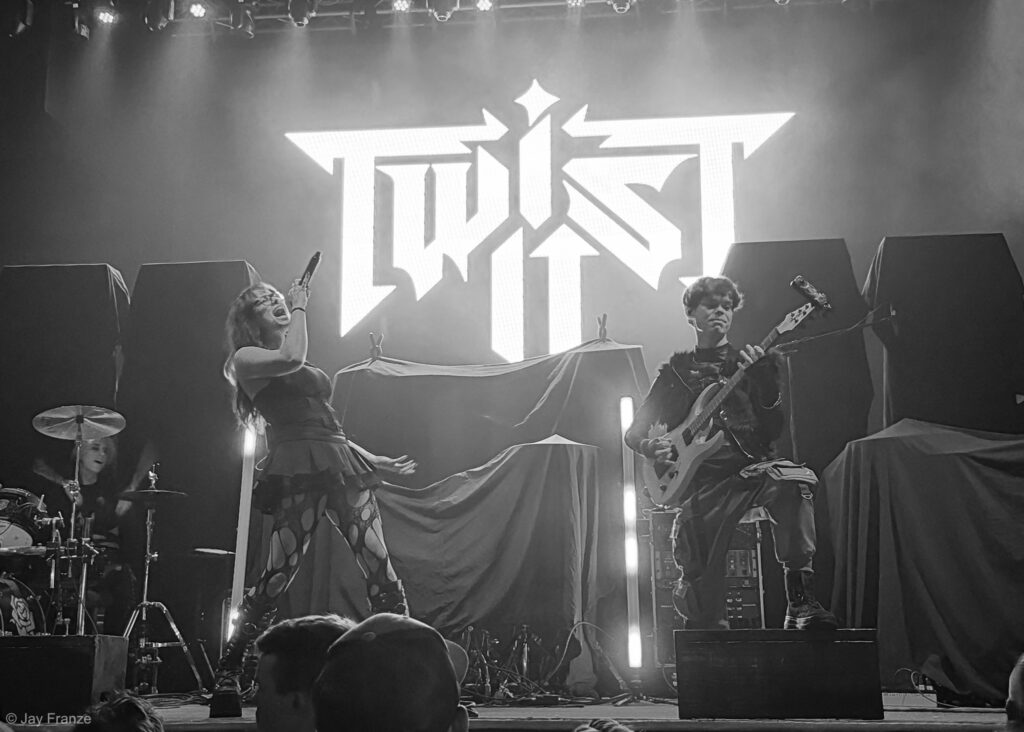
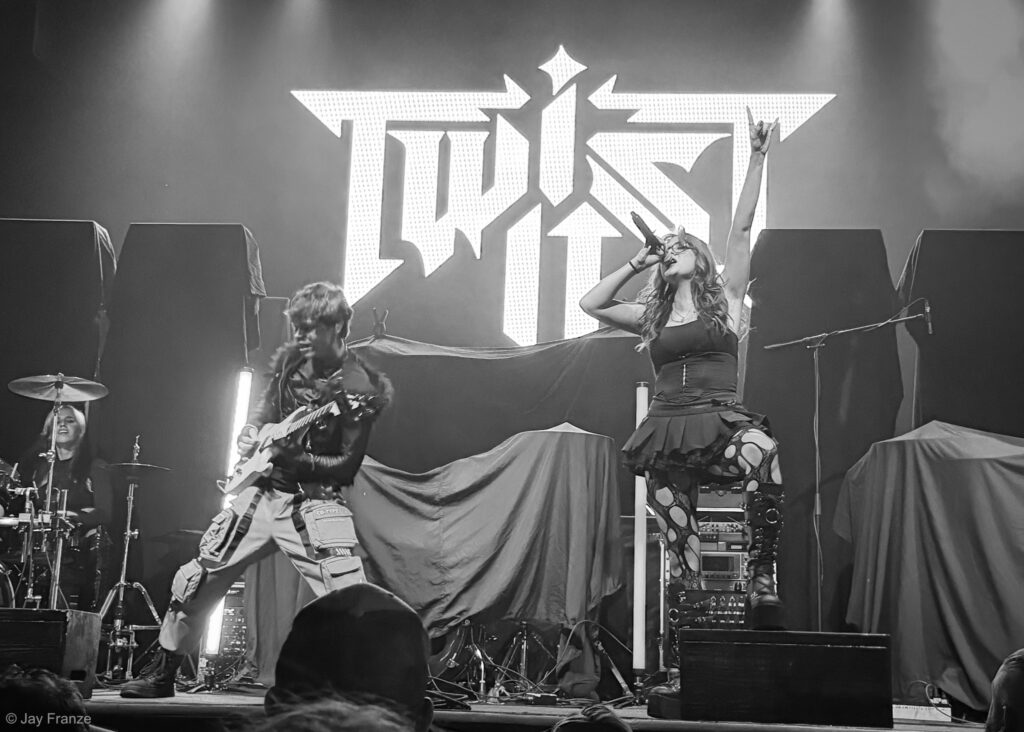
As the house lights dropped, the sold-out crowd erupted while the band walked onstage like seasoned veterans. Dressed like modern rock stars and entering to pre-recorded music, they immediately controlled the room before even touching an instrument. Then drummer Sarah Higgins triggered the backing tracks, counted off the opening song, and the place detonated.
They opened with “Dark Thoughts,” which was the perfect call. The song hits like a panic attack wrapped in distortion, aggressive, emotional, and explosive from the first beat. Logan Smith’s guitar work was crushing live, balancing djent-inspired precision with massive melodic hooks. Meanwhile, Sarah Higgins delivered the kind of tight, machine-like drum performance that modern rock absolutely depends on.
And yes, they use backing tracks.
But unlike countless bands using tracks as a crutch, Twist It uses them as a weapon. This is still a true trio. Sarah plays the bass in advance and triggers the track while actively playing drums, which somehow makes the entire operation even more impressive. Everything had purpose. Nothing felt fake.
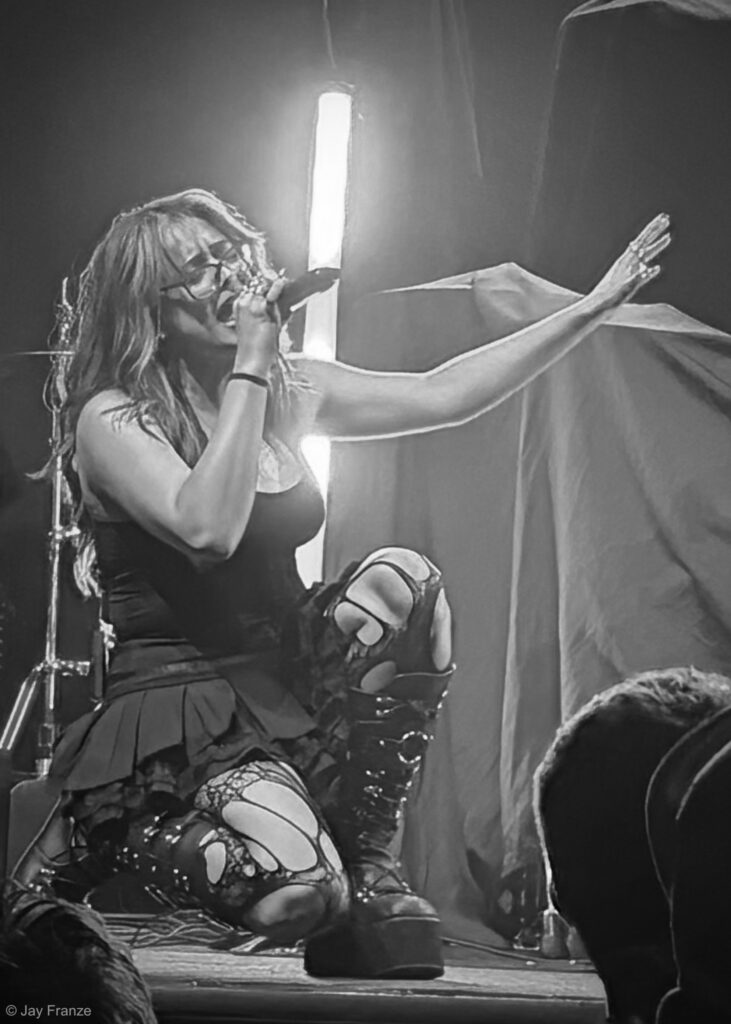
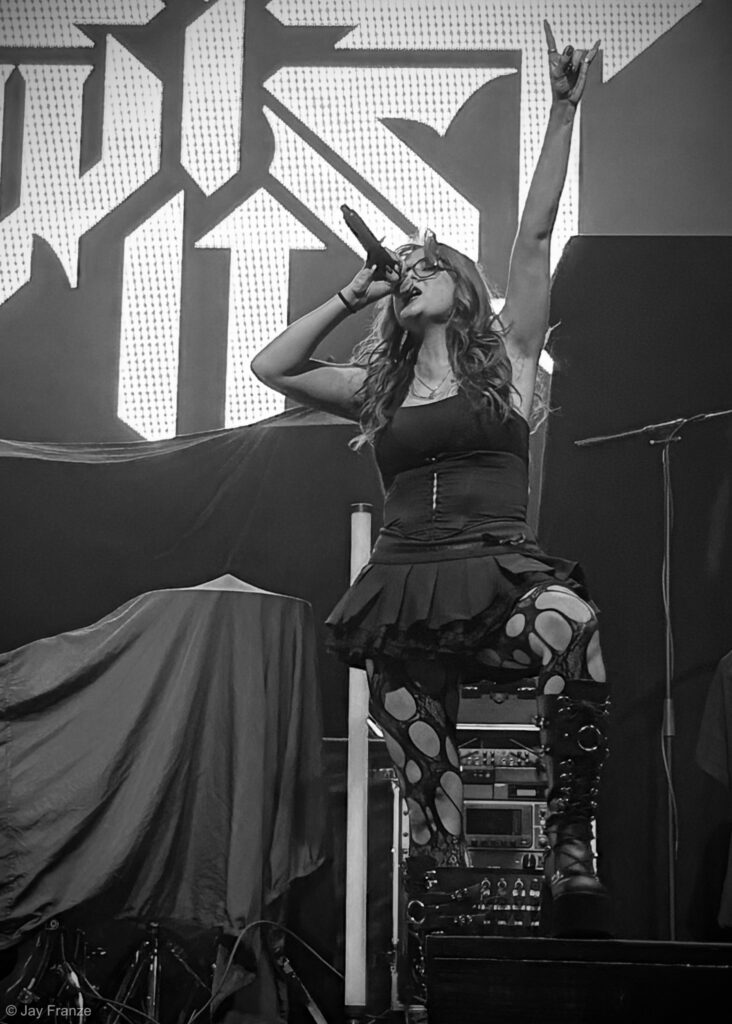
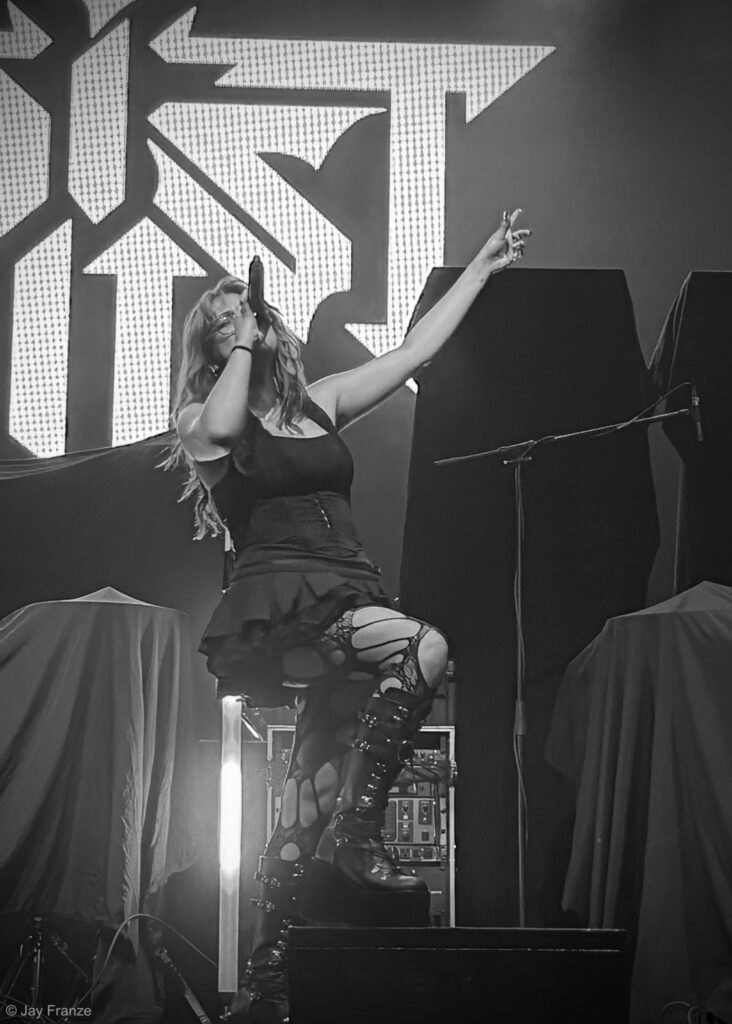
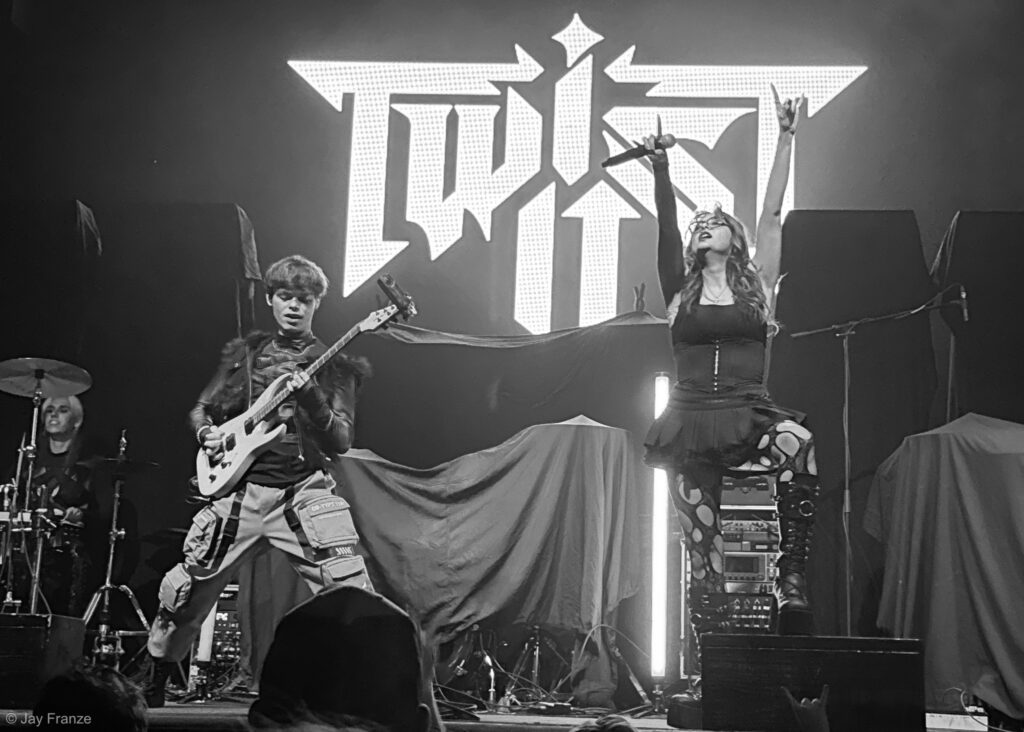
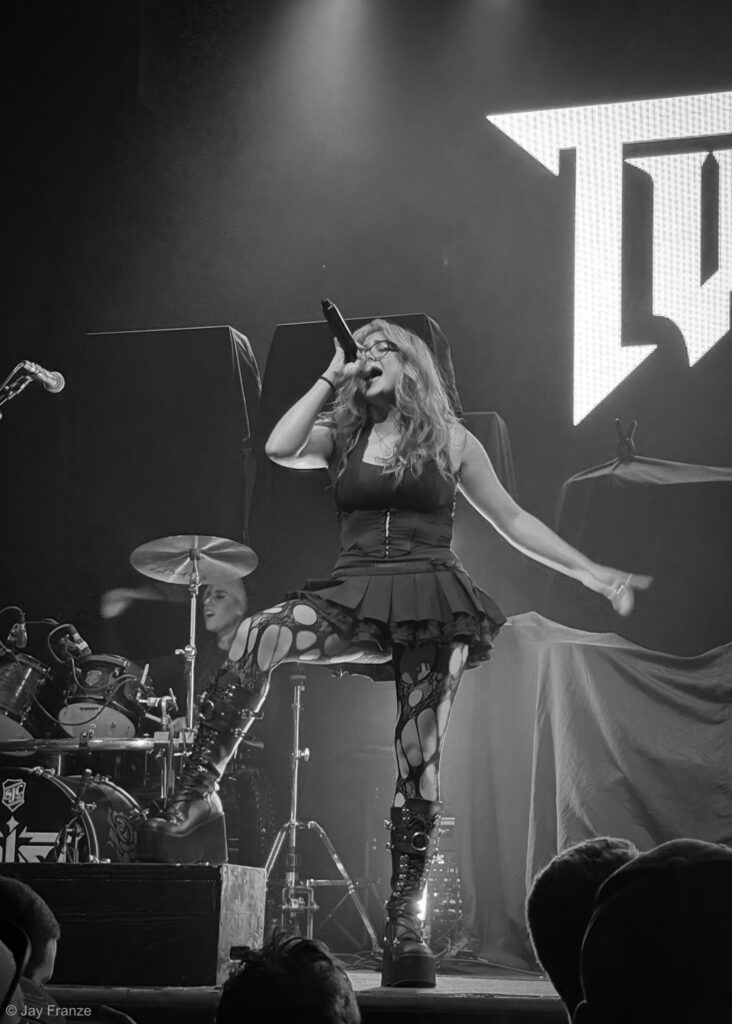
Then came the moment that really mattered, Kayla Hallman stepping to the mic.
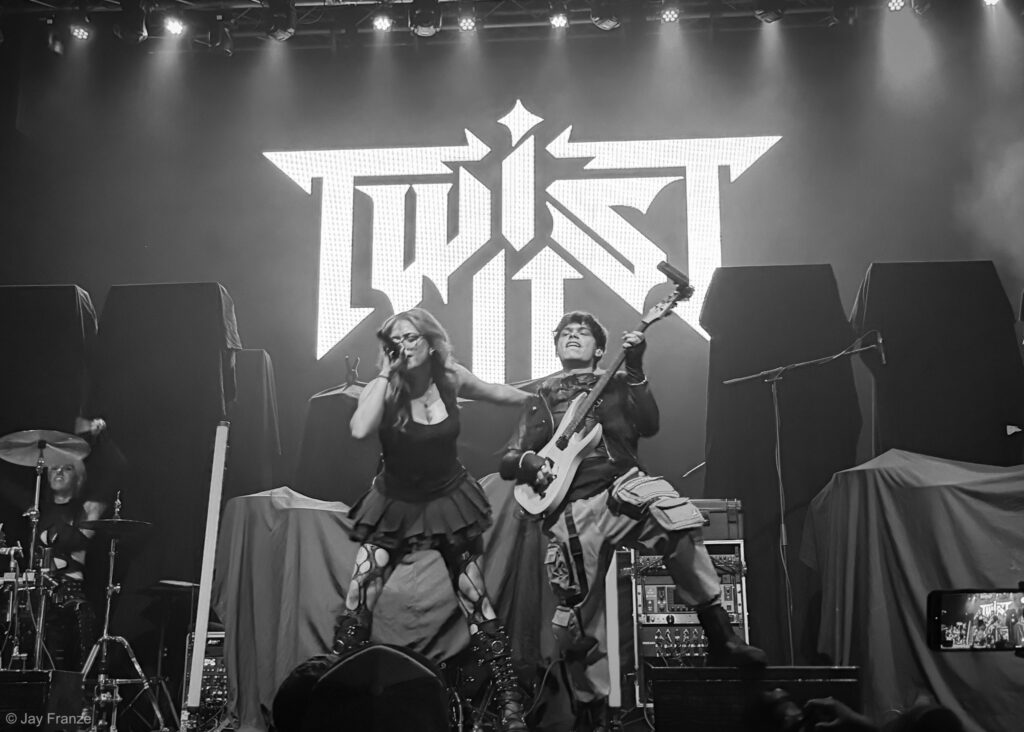
Live vocals are where many younger modern rock bands get exposed. Studio polish disappears quickly under stage lights. But Hallman didn’t just survive the moment, she owned it. She delivered every lyric with conviction, emotion, and enough raw energy to make the crowd feel every ounce of anxiety and tension built into the songs. By the second chorus, fans were already screaming lyrics back at her.
That’s not hype.
That’s connection.
What stood out most throughout the set was the chemistry between all three members. You can teach technique. You can improve stage presence. But chemistry is either there or it isn’t. Twist It already has it, and that’s dangerous for everybody else trying to compete in modern hard rock.
Logan Smith deserves serious recognition here as well. His playing throughout the night was effortless in the best possible way, massive rhythm tones, sharp transitions, and melodic solos that ripped through the room without becoming self-indulgent. Every note served the song.
If there was one weak point during the night, it came from the front-of-house mix. The band was working with the house engineer, which is always a gamble. Sometimes it works because the engineer knows the room. Sometimes it doesn’t because they don’t fully understand the nuances of the band’s sound.
Unfortunately, the low end around 60 Hz became muddy throughout portions of the set, causing Sarah’s impressive double-bass work to lose some definition in the room. More concerning, Kayla’s vocals occasionally sat too low in the mix, forcing her to push harder vocally than she should have needed to.
To be clear, it didn’t hurt the performance. If anything, it added a little extra chaos and intensity to the show. But long-term, consistently oversinging against a heavy mix can become dangerous territory for any vocalist.
The band closed the night with their latest single, “Honest,” and it felt like the final statement of a breakout performance. Heavy, emotional, polished, and absolutely massive live.
Then came the part that told you everything you need to know about who this band really is.
After walking offstage to screaming fans, the members of Twist It headed directly to the merch table, taking photos, signing autographs, and talking with every single fan who waited to meet them. No ego. No fake rockstar attitude. Just three hardworking musicians understanding exactly who helped put them on that stage.
Class act.
There are plenty of bands chasing the future of modern hard rock right now. Very few actually feel capable of leading it.