Links

Links
There are tribute shows.
There are nostalgia tours.
And then there are nights where a guy walks on stage at 67 years old, stares Father Time directly in the face, and basically tells him to shut the f~~k up and sit down.
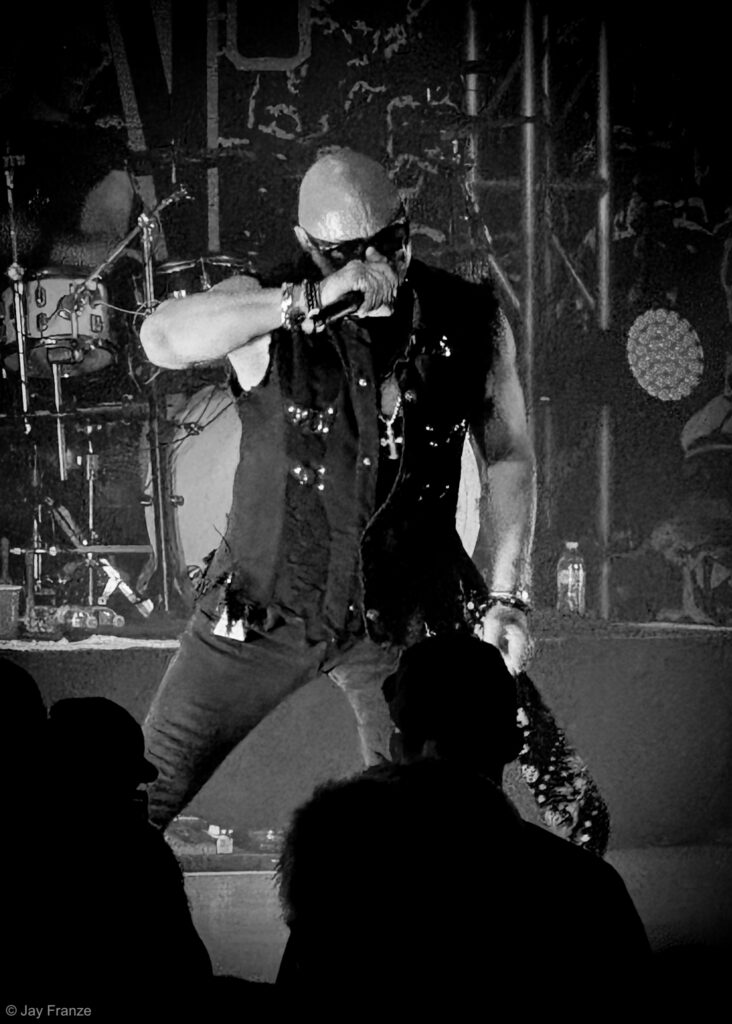
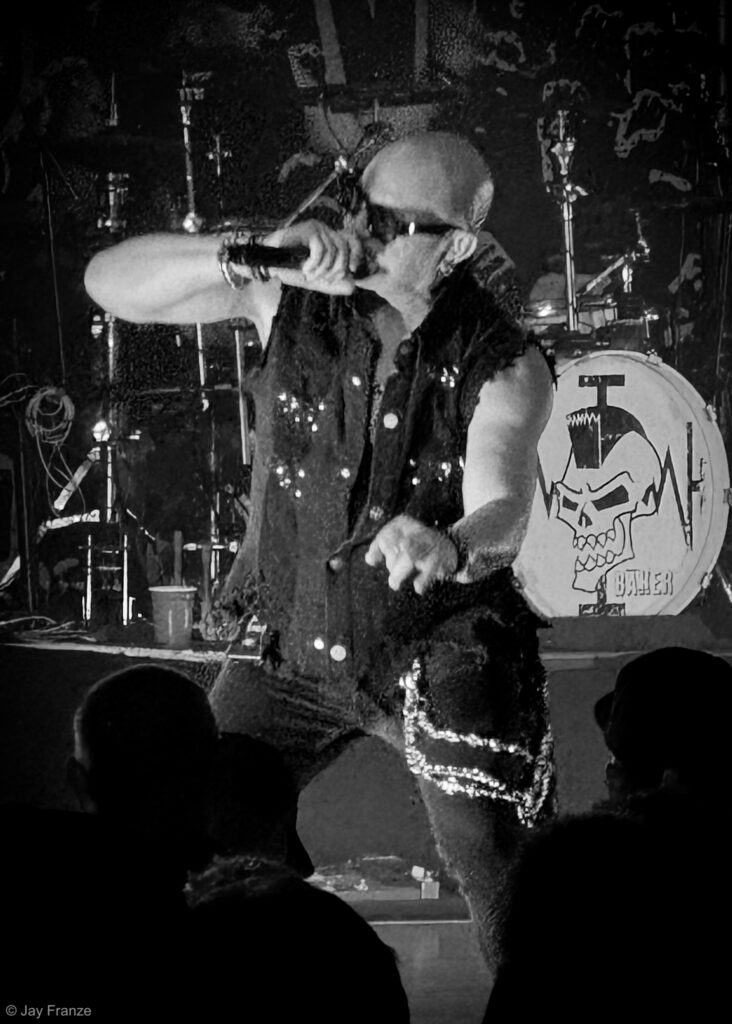
That was Friday night at Taft Theatre as Geoff Tate and his band Operation: Mindcrime brought Operation: Mindcrime to life in a performance that felt less like a concert and more like a full-blown theatrical detonation inside one of Cincinnati’s most historic rooms.
Built in 1928, the Taft has seen legends come and go for nearly a century. Friday night, it witnessed another reminder that great music doesn’t age, it just gets louder, darker, and somehow even more dangerous.
The lights dropped. The room went black.
Then came the unmistakable hospital sounds.
“I remember now. I remember how it started. I can’t remember yesterday. I just remember doing what they told me, told me, told me…”
And just like that, the audience was no longer in downtown Cincinnati. They were inside the world Operation: Mindcrime.
For fans of Queensrÿche, this wasn’t just another catalog run-through. This was a front-to-back performance of one of the greatest concept albums ever recorded, delivered with precision, intensity, and enough emotional weight to remind everyone exactly why this record still matters nearly four decades later.
Let’s address the obvious elephant in the room: Geoff Tate hasn’t been in Queensrÿche since 2012. The band kept the name. Tate retained the rights to perform the Operation: Mindcrime albums in their entirety and ultimately built an entire touring identity around them.
Honestly? Good.
Because what happened Friday night didn’t feel like a watered-down nostalgia act clinging to old glory. It felt like the guy who originally helped create the madness simply decided to reclaim it.
And here’s the truly absurd part: Tate still sounds unbelievable.
At 67 years old, the man is still hitting notes that singers half his age dodge in fear. There was no visible decline. No “adjusted melodies.” No strategic crowd-sing moments to hide vocal fatigue. He attacked the material with the same sharpness, tone, and theatrical command that made him one of progressive metal’s defining voices in the first place.
The band behind him absolutely deserved the spotlight too.
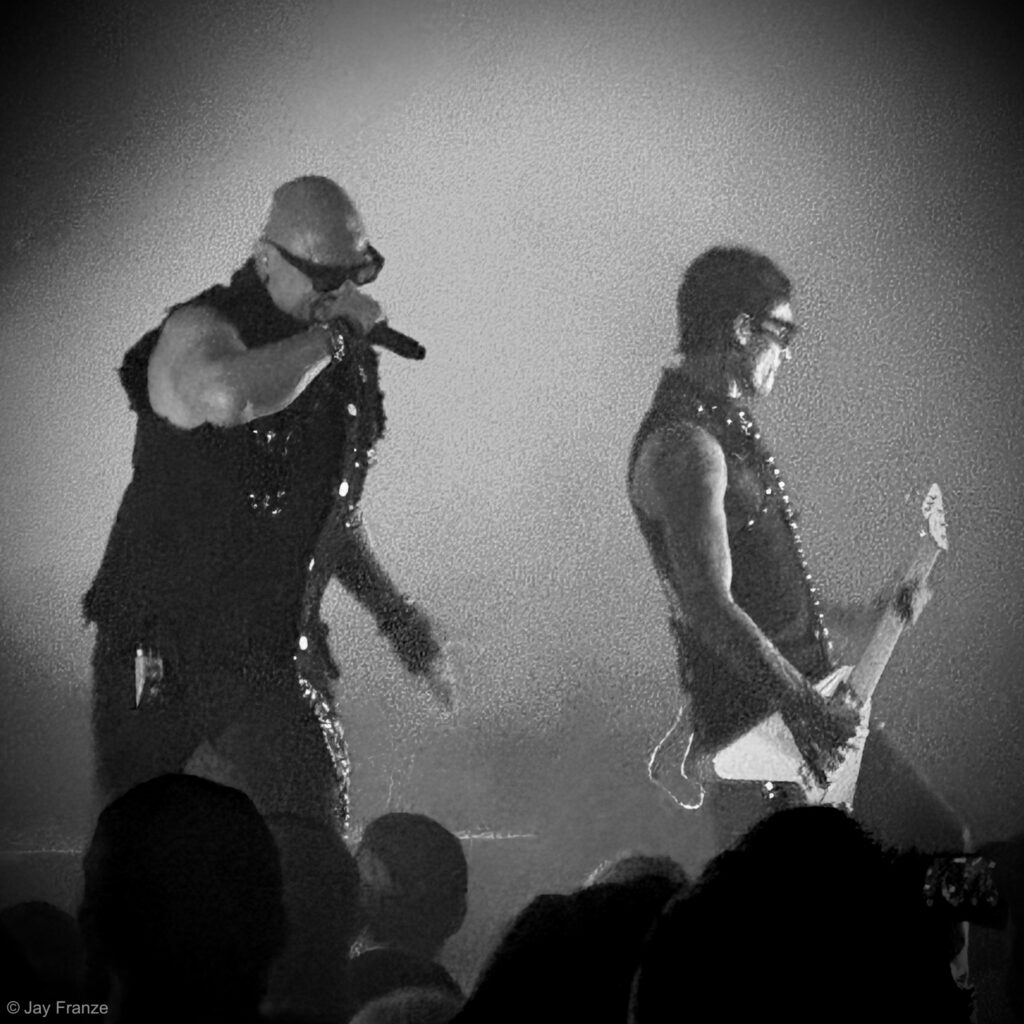
Kieran Robertson was a monster all night. The guy played with the confidence and swagger of a veteran arena guitarist while still carrying the fire and recklessness of someone young enough to think sleep is optional. At just 27 years old, Robertson ripped through the album’s intricate leads with frightening precision while somehow making every solo feel dangerous instead of rehearsed. There’s a difference between “playing the notes” and owning them. He owned them.
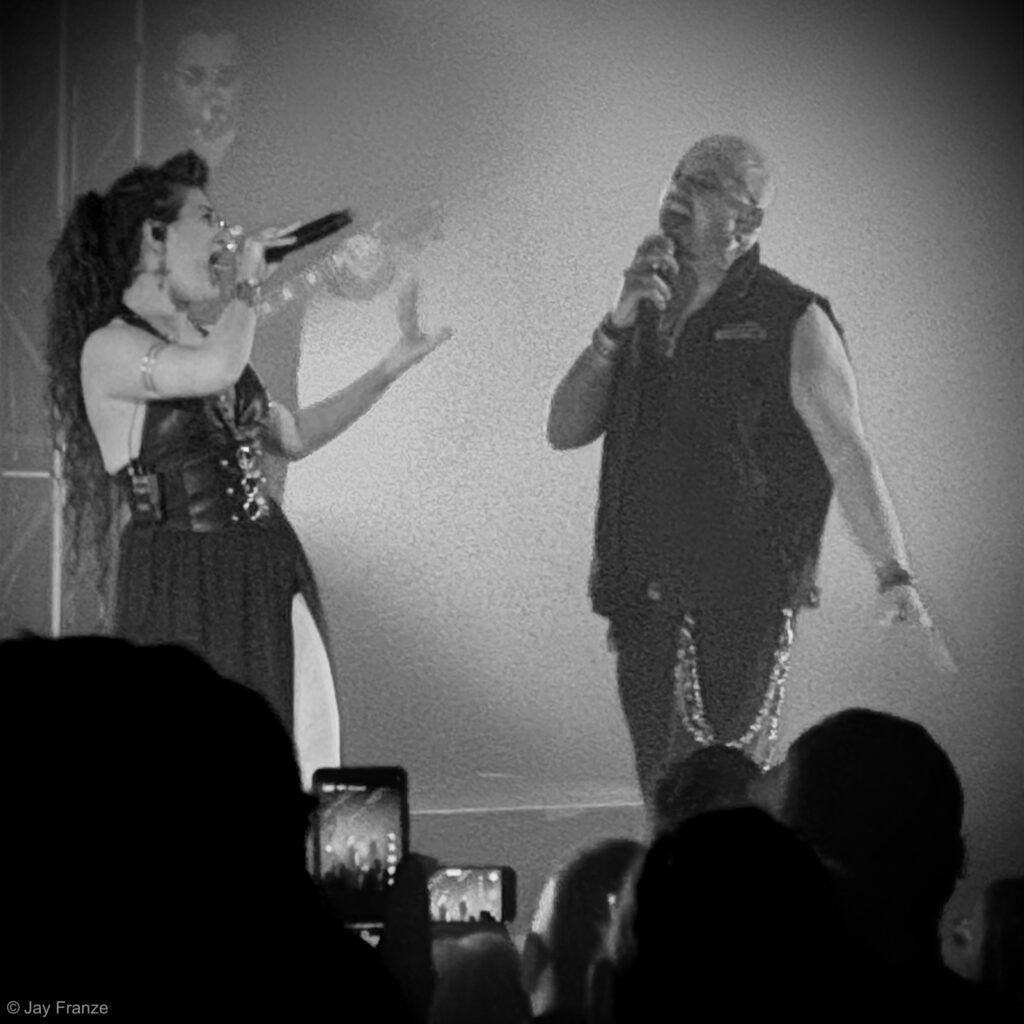
Clodagh McCarthy brought a massive theatrical presence to the stage, particularly during her performance as Sister Mary. Her vocals were powerful, haunting, and emotionally sharp, exactly what this material demands. Visually, she became part of the production itself. Positioned stage right on a raised riser beside the drum kit, her rotating keyboard stand and perfectly timed stage fan gave the performance an almost cinematic quality. Somewhere between gothic theater and prog-metal fever dream, it worked brilliantly.
The rhythm section deserves major credit too. Every transition, tempo shift, and layered arrangement landed with surgical execution. Operation: Mindcrime is not simple material. These songs twist, turn, and evolve constantly. One weak link destroys the illusion. There weren’t any weak links Friday night.
And then… things got weird.
Midway through the set, the band suddenly bolted off stage.
Not “rockstar dramatic exit” bolted.
More like “something is very wrong” bolted.
The audience sat in confused silence for a moment before Geoff Tate calmly returned to explain that the tour bus was apparently on fire outside and that Cincinnati’s finest was handling the situation.
Because of course this show needed an actual real-life disaster subplot.
In true rock-and-roll fashion, the crowd stayed patient, Tate disappeared again, and the band returned shortly afterward apologizing before jumping directly back into the performance like, “Anyway… where were we before the possible explosion?”
Honestly, the interruption somehow made the night even more memorable. You can’t script that kind of chaos. Well… unless you’re in Spinal Tap.
The final stretch of the evening was pure payoff. The band completed Operation: Mindcrime, added material from Operation: Mindcrime III, and then rolled into several classics that reminded everyone just how deep Geoff Tate’s catalog really is.
“Empire” hit like a freight train.
“Jet City Woman” turned the entire theater into a choir.
And “Silent Lucidity” became the emotional centerpiece of the night.
Before performing it, Tate explained that it remains his favorite song because fans constantly approach him with stories tied to it, memories, relationships, moments in life, and yes… apparently the conception stories of their children. Nothing says progressive metal quite like thousands of people collectively realizing a power ballad accidentally became part of America’s population growth strategy.
By the time the final notes faded inside the Taft, one thing was painfully clear:
This wasn’t a legacy artist limping through old material for a paycheck.
This was a masterclass in how timeless music survives lineup changes, industry politics, aging, and even apparently a flaming tour bus.
For one night in Cincinnati, Geoff Tate and Operation: Mindcrime didn’t just revisit a classic album.
They reminded everyone why it became one in the first place.
Links
With nearly a century of history, exceptional acoustics, and an intimate design that offers outstanding views from every seat, the Taft Theatre continues to prove why it remains one of Cincinnati’s premier concert destinations.
Some venues impress you before the lights ever go down.
The Taft Theatre is one of them.
Long before the first note echoed through the room, my evening began behind the building, standing beside a tour bus with Kieran Robertson, guitarist for Geoff Tate, and his father, who also happened to be Geoff’s tour manager.
Just a few weeks earlier, Kieran had joined me for an interview. At the end of our conversation, he extended an invitation to come photograph the Operation: Mindcrime tour when it reached Cincinnati.
It was an invitation I wasn’t about to decline.
Meeting musicians backstage is always interesting because it’s where the performance disappears and the people emerge. Cases are being loaded. Crew members move with purpose. Conversations bounce between music, travel, and whatever happens to be on everyone’s mind.
Kieran introduced me to his father, whose Scottish accent somehow managed to make Kieran’s seem almost subtle by comparison. He couldn’t have been more welcoming. We stood outside the bus talking for quite a while with several members of the touring party, everyone casually smoking cigarettes as though they were stocking up before being separated from nicotine for the next several hours.
Before heading inside, Kieran’s father handed me a Geoff Tate Operation: Mindcrime guitar pick.
It’s sitting in my collection today, not because it’s rare, but because it reminds me that some of the best memories surrounding live music happen long before anyone walks onto the stage.
Located in the heart of downtown Cincinnati, the Taft Theatre has welcomed audiences since 1928. Originally constructed as a grand movie palace, the venue has evolved into one of the city’s most respected homes for concerts, comedy, podcasts, lectures, and theatrical performances while carefully preserving much of its historic architecture and elegance. Its intimate auditorium seats just over 2,500 guests, striking a balance between the grandeur of a traditional theater and the connection of a much smaller room.
Walking through the entrance feels exactly the way you hope an old theater will feel.
Elegant.
Classic.
Purposefully designed.
Rather than overwhelming visitors with excess, the architecture quietly reminds you that you’re somewhere with history. Ornate details, sweeping staircases, warm lighting, and carefully restored finishes create an atmosphere that encourages people to slow down for a moment before finding their seats.
Halfway through entering the building, something clicked.
I’d been here before.
Years earlier, I had attended a live podcast recording with my daughter and one of her friends. It was funny how quickly the room came back to me. Some venues disappear from memory once the performance ends.
The Taft doesn’t.
The phrase “there isn’t a bad seat in the house” gets thrown around so often that it has almost lost its meaning.
At the Taft Theatre, it actually feels accurate.
The auditorium was designed before massive video walls became a necessity. The architecture naturally draws attention toward the stage, while the gradual seating layout creates surprisingly good sightlines from nearly every section.
Even from farther back, the stage feels connected to the audience rather than distant.
The venue also strikes an ideal balance in size.
It’s large enough to host nationally touring artists while remaining intimate enough that performers can still interact naturally with the crowd. You’re never so far removed that the concert feels like you’re watching it on television.
That intimacy worked perfectly for Geoff Tate’s performance.
Operation: Mindcrime is an album built around storytelling, atmosphere, and precision. Those songs benefit from a room where audiences can hear subtle musical details just as clearly as the louder moments.
The Taft delivered.
Great acoustics often go unnoticed because they’re supposed to.
People leave talking about the performance instead of the sound system.
That’s usually a sign everything worked exactly as intended.
Unlike many older buildings that have been converted into concert spaces, the Taft benefits from thoughtful acoustic treatment that complements modern productions while respecting the building’s original architecture.
The result is clarity.
Vocals remain intelligible.
Guitars retain their definition.
The rhythm section carries weight without becoming muddy.
Every instrument occupies its own place within the mix.
From a journalist’s perspective, that’s refreshing.
From a musician’s perspective, it’s invaluable.
The room allows artists to sound like themselves rather than forcing engineers to spend the evening fighting reflections, standing waves, or problematic frequencies.
After spending time photographing performances in industrial clubs and converted warehouses, walking into a room like the Taft is a reminder that architecture can be just as important as technology.
Concert photographers quickly learn that no two stages are alike.
Some are cramped.
Some are unnecessarily tall.
Others are so wide that performers seem isolated from one another.
The Taft finds a comfortable middle ground.
The stage is large enough to accommodate a full touring production without making performers feel disconnected. Band members have room to move naturally while remaining visually close enough to create compelling compositions.
The lighting during Geoff Tate’s performance complemented the production well, providing enough variety and intensity without overwhelming the stage.
Just as importantly, the theater’s seating arrangement creates clean viewing angles throughout the room.
The architecture itself also becomes part of the photography.
Unlike industrial music clubs where the background often disappears into darkness, the Taft offers visual context that reminds viewers they’re watching something inside a historic theater.
It’s a subtle difference, but one that gives photographs a distinct personality.
No venue is perfect.
Sometimes the very characteristics that give a building its personality also create its greatest challenges.
For the Taft, that challenge appears between the auditorium and the lobby.
Merchandise tables are positioned off to the side in a hallway near one of the smaller bars and an exterior exit.
While the location makes practical use of available space, it quickly becomes crowded.
Fans browsing merchandise, waiting to meet band members, purchasing vinyl, or simply moving through the hallway all compete for the same limited area.
Because the hallway also connects to one of the primary stairways leading downstairs toward the main bar and restrooms, foot traffic naturally bottlenecks during intermission and after the show.
For photographers, it can also become difficult to capture casual fan interactions or artist meet-and-greets without constantly working around heavy pedestrian traffic.
None of these issues diminish the concert itself.
They’re simply reminders that a nearly century-old theater wasn’t originally designed around modern touring merchandise operations.
Being located in downtown Cincinnati offers obvious advantages.
Restaurants.
Hotels.
Nightlife.
Easy access to everything happening in the city.
It also means parking requires a little planning.
Finding a convenient garage isn’t difficult, but visitors should expect to walk a block or two depending on where they park and what else is happening downtown that evening.
I ended up parking in a nearby garage only a short walk away.
The extra few minutes were hardly enough to affect the evening, but it’s something worth keeping in mind if you’re arriving close to showtime.
Like many downtown theaters across the country, parking isn’t impossible, it simply rewards those who arrive prepared.
One of the things I appreciate most about the Taft Theatre is its versatility.
It doesn’t exist solely as a concert venue.
Before attending Geoff Tate’s performance, my most recent memory of the building involved sitting beside my daughter during a live podcast recording.
The experience couldn’t have been more different.
Yet somehow the room felt equally appropriate.
That flexibility speaks to thoughtful design.
Some venues only succeed when the volume reaches eleven.
Others only shine during formal performances.
The Taft comfortably hosts concerts, spoken-word events, comedy, podcasts, and theatrical productions without feeling like it’s compromising its identity.
Instead, the building adapts while remaining unmistakably itself.
Some venues earn repeat visits because of the artists they book.
Others earn them because of the room itself.
The Taft Theatre manages to do both.
The combination of history, acoustics, architecture, and intimate seating creates a concert experience that’s increasingly difficult to find.
Yes, downtown parking requires a little patience.
Yes, the merchandise hallway can become crowded.
Neither of those things outweigh what happens once the lights dim.
Whether I’m attending as a journalist, photographer, or simply another music fan, the Taft consistently delivers the thing that matters most:
An outstanding place to experience live music.
Some theaters survive because they’re historic.
The Taft remains relevant because it continues giving audiences reasons to return.
And after another memorable evening, this one shared with old friends, new conversations, and one very appreciated guitar pick, I know I’ll happily be among them.
Venue: Taft Theatre
Location: 317 East Fifth Street, Cincinnati, Ohio
Opened: 1928
Capacity: Approximately 2,500
Venue Type: Historic theater
Programming: Concerts, comedy, podcasts, lectures, and theatrical performances
Known For: Historic architecture, exceptional acoustics, intimate seating, downtown location
Website: https://tafttheatre.org/