
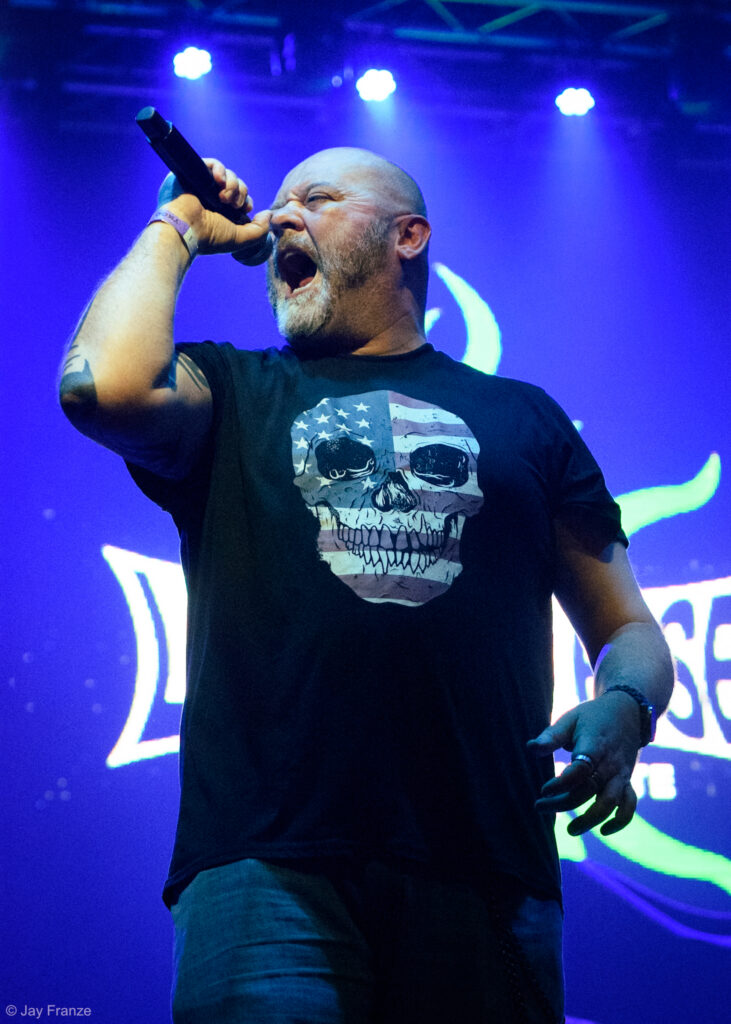
Legends Rise (King of Clubs, Columbus, OH) 8/1/26

It was one of those nights where live music fans had way too many choices.

There were major concerts happening all over the Midwest, but when Matthew Fritsch reached out and asked if I’d make the trip to Columbus to shoot his show at the King of Clubs, I didn’t hesitate. I’d already made one trip to the venue earlier this year to photograph Twist It, and I left that night wondering if I loved the venue because of the room…or because Twist It absolutely blew the doors off the place.

Turns out, it was both.

Here’s the funny part…

Somewhere during our conversation, I completely missed the fact that this wasn’t actually a Life After This show. I loaded up my gear expecting to photograph the band’s original music, only to discover after arriving that it was an entire night dedicated to rock tribute acts.

And, well…

I was pleasantly surprised.

Tribute bands have exploded in popularity over the last several years, but I’d never really spent an evening covering an entire lineup dedicated to celebrating legendary rock bands. If anyone was going to convince me that tribute nights deserved the attention they’ve been getting, I figured it was probably going to be these guys.

The King of Clubs sits about two hours north of me, so I left around 4:00 p.m. to give myself enough time to hang out with the band before the show. It was one of those perfect summer drives, mid-80s, overcast skies keeping the heat in check, and almost no traffic. I wish every road trip to a concert was that easy.

I pulled into the parking lot just as Matthew arrived. The rest of the band was already unloading gear, so instead of standing around pretending to look important with a camera around my neck, I jumped in and helped load equipment.

That’s one of the things I like about nights like these.

People see the lights, the music, and the crowd, but they don’t always see the hours of work that happen before anyone walks through the front doors. Cases get rolled in, cables get run, drums get assembled, guitars get tuned, and somewhere in the middle of all that chaos, everyone is somehow still laughing.

After checking in with the venue staff and grabbing my media pass, I took some time to get my camera gear ready and scout a few angles. I remembered the balcony. It’s one of my favorite places to shoot because it gives you a completely different perspective than standing in the pit all night.

Once the stage was set, the guys disappeared backstage to get ready while I wandered around talking with the venue staff and the band’s crew.

Then the lights went down.

The massive LED wall behind the stage lit up with the Legends Rise logo, complete with a subtle nod to Godsmack, and within seconds the room went from quiet anticipation to organized chaos.

And I mean that in the best possible way.

Legends Rise never tries to convince you they’re Godsmack.

They’re not wearing costumes.

They’re not trying to imitate Sully Erna’s every move.

They’re simply four incredible musicians paying respect to a band they clearly admire.

Ironically, that makes the performance feel even more authentic.

Matthew Fritsch attacks the stage with enough energy to make you tired just watching him. Whether he’s climbing onto the risers, working every corner of the stage, or leaning into the crowd, he never lets the momentum drop for even a second.

Guitarist Thomas Cheek is just as entertaining to watch. His playing is locked in, but it’s his animated stage presence that keeps pulling your eyes across the stage.

Meanwhile, bassist Ray Vitatoe and drummer Matt Johnson build the kind of rhythm section that you don’t just hear, you feel it. Every kick drum hits you square in the chest while Ray’s bass locks everything together with that thick, driving groove Godsmack fans expect.

Of course, that’s probably what happens when you’ve spent years playing together as Life After This. Chemistry like that can’t be faked.

The evening itself was basically a celebration of hard rock.

Legends Rise opened with a tribute to Godsmack before handing things over to Sanitarium, paying tribute to Metallica, followed by Last Train to Ozz, honoring Ozzy Osbourne.

I’ll be honest…

Tribute bands have exploded in popularity over the last few years, and not all of them are created equal.

These were.

I’ve been fortunate enough to see Godsmack, Metallica, and Ozzy Osbourne over the years, so I don’t throw comparisons around lightly. Every band on this bill had obviously spent countless hours perfecting these songs, but it wasn’t just the accuracy.

It was the passion.

None of these musicians looked like they were simply going through the motions. They looked like fans who happened to be talented enough to recreate some of rock’s greatest songs at an incredibly high level.

And the crowd fed off every second of it.

As Legends Rise wrapped up their final song, my phone buzzed in my pocket.

It was my wife.

Back home in Northern Kentucky, tornado sirens were sounding as severe storms rolled through the area. She wanted to let me know that she and the family were taking cover and, make sure I knew what was happening in case the weather decided to follow me north toward Columbus.

For a few moments, my mind shifted from camera settings and stage lighting to radar maps and weather alerts. Thankfully, everyone back home was safe, and once I knew they were okay, I could turn my attention back to what had been an outstanding evening of live music.

One thing that really stood out happened after Legends Rise left the stage.

Instead of disappearing backstage, the band headed straight to the merch booth, talking with fans, signing merchandise, taking pictures, and introducing people to their original band, Life After This.

That’s just smart.

If someone walks away thinking, “If their tribute band is this good, I wonder what their original music sounds like?” you’ve just gained a new listener.

Even better, the guys stuck around for the rest of the night to support the other bands instead of packing up and heading home after their set. That’s something audiences rarely notice, but other musicians always do.

It’s the kind of thing that tells you exactly who people are.

By the end of the night, I had my answer about the King of Clubs.

It wasn’t Twist It.

The venue itself deserves the credit. Great sightlines, excellent production, a friendly staff, and enough room that there really isn’t a bad place to watch a show. After two visits, it’s quickly becoming one of my favorite venues in Ohio.

As for Legends Rise…

They reminded me that tribute bands don’t have to be impersonators to be great.

Sometimes all it takes is four musicians who genuinely love the music they’re playing, and have the talent to make you forget, even for a couple of hours, that you’re not watching the original band.

I’ve become a big fan of Life After This over the past several months, and after seeing what they can do as Legends Rise, I’ll happily make the drive to catch either project again.

Some shows are memorable because of the music.

Others stick with you because of the people you meet.

This one managed to be both.

Links

Trey Calloway – 7/20/26

You can hear it in Trey Calloway’s voice: the grind is still there, but something has shifted. The work feels more focused, the circle is tighter, and the next steps look a lot more like a real Nashville plan than a hopeful guess. Jay Franze sits down with Trey to talk through the behind-the-scenes moves that actually change a country artist’s trajectory: signing with manager Jerry Hines, learning how to lead with confidence, and building a team that believes in you when you are tempted to doubt yourself.

We dig into the advice Trey is getting from Jerry and Craig Morgan, especially the part most artists struggle with: stop selling yourself so hard and start trusting what you do well. Trey shares how he used to turn rejection inward, how that mindset can poison your momentum, and why positivity matters when you are the “CEO” of your own career. If you care about artist development, music industry mentorship, and the mental health side of chasing big goals, this conversation gets specific fast.

Then we go deep on the practical craft: working with producer Phil O’Donnell, recording at Soundstage Studios on Music Row, and why collaboration with great players can elevate a record without losing the heart of the song. Trey also breaks down a huge weekend as Craig Morgan’s special guest, what the tour bus life taught him, and how a single onstage introduction can translate into real social media growth.

We close with big news about Broken Compass and the broader mission of building careers the right way, plus plenty of road stories along the way. Subscribe for more conversations like this, share it with a friend who loves country music, and leave a review that tells us what part hit you the hardest.

Send us Fan Mail

Support the show

Links

Contact

Socials

Services

Books

Merchandise

Support

Shout Outs

Trey Calloway: Isn’t Chasing Fame, He’s Building a Career That Lasts

Success in country music has a funny way of looking glamorous from a distance.

Fans see sold-out shows, tour buses, backstage passes, and artists sharing the stage with country legends.

What they don’t see are the lonely apartments.

The long drives home.

The family members living hundreds of miles away.

The self-doubt that creeps in after every missed opportunity.

Or the years spent wondering if all the sacrifices will eventually mean something.

Talking with Trey Calloway, one thing became immediately clear.

He’s finally beginning to see the payoff.

Not because he’s suddenly become an overnight success.

But because every brick he’s spent years laying is finally starting to resemble the foundation of a real career.

Every Career Changes With One Phone Call

Sometimes careers change because of a hit song.

Sometimes they change because of a chance meeting.

For Trey, it started with a fiddle player.

Jim Ed Hodges introduced him to longtime Craig Morgan tour manager Jerry Hines.

One lunch meeting turned into artist management.

Management turned into mentorship.

Mentorship turned into friendship.

And friendship opened doors that simply weren’t available before.

It’s tempting to call that luck.

It wasn’t.

Luck may have created the introduction.

Everything that followed was built on trust.

That’s an important distinction.

Relationships might open the first door.

Character determines whether anyone opens the second.

The Marathon Nobody Talks About

One of the most revealing moments during our conversation had nothing to do with music.

It centered around mindset.

Trey openly admitted something many artists are afraid to say out loud.

He’s always been incredibly hard on himself.

Every missed opportunity became personal.

Every setback became evidence that maybe he wasn’t working hard enough.

Jerry Hines, and later Craig Morgan, began changing that perspective.

Their message wasn’t complicated.

Stop trying to sprint through a marathon.

Build one brick at a time.

That’s advice that applies well beyond country music.

Most meaningful careers aren’t built in giant leaps.

They’re built through small, consistent decisions repeated over years.

Listening to Trey describe that shift, you could almost hear the weight lifting off his shoulders.

Chasing a Dream Means Living Apart

Perhaps the most difficult part of Trey’s story isn’t professional.

It’s personal.

His wife and daughter remain in South Carolina while Trey continues pursuing country music in Nashville.

It’s a reality few fans ever consider.

Every songwriter talks about sacrifice.

Very few have to define it by geography.

His wife supports the dream completely, but careers, and mortgages, don’t always cooperate with ideal circumstances.

As Trey explained, Nashville is where his career has to happen.

South Carolina is where part of his heart still lives.

That’s not a romantic version of chasing a dream.

It’s the real one.

Finding the Right Producer Changes Everything

Every artist eventually reaches a point where they stop looking for someone to simply record songs.

They start looking for someone who understands them.

For Trey, that producer is Phil O’Donnell.

Throughout our conversation, Trey spoke less about Phil’s résumé and more about his character.

A family man.

A collaborator.

Someone who listens.

Someone who welcomes ideas rather than shutting them down.

That’s an underrated quality in record production.

Great producers don’t simply capture performances.

They create environments where artists feel comfortable enough to give honest ones.

Trey believes the music they’re creating together is the strongest work of his career.

After hearing him talk about the process, it’s easy to understand why.

Some Studios Just Feel Different

As someone who’s spent years inside Nashville recording studios myself, I smiled when Trey started describing his first experience recording at Sound Stage Studios.

There’s something about that building.

It’s difficult to explain unless you’ve been there.

History seems to linger in the walls.

Trey felt it immediately.

Walking into the same rooms where countless hit records have been made gave him a sense that this wasn’t simply another recording session.

This was Music Row.

This was where dreams become records.

He also appreciated something that often gets overlooked.

The musicians.

Phil O’Donnell gave everyone in the room permission to contribute ideas.

Nobody was simply reading charts.

Everyone was making the songs better.

That’s still the magic of Nashville.

The right players can transform a good song into something unforgettable.

The First Tour Bus Is Something You Never Forget

Ask veteran touring musicians about their first bus run and you’ll usually get a smile.

Trey’s reaction was no different.

Everything felt new.

Sleeping in a bunk.

Making coffee on the bus.

Watching seasoned musicians settle into routines they’ve perfected over decades.

Playing in front of thousands of people.

Sharing the stage with Craig Morgan.

The excitement practically jumped through the conversation.

What stood out most, however, wasn’t the size of the audience.

It was the sense of belonging.

Craig’s band.

The crew.

The production team.

Everyone welcomed him.

For a young artist trying to break into one of the toughest businesses in entertainment, that’s invaluable.

Because confidence often grows fastest when it’s borrowed from people who’ve already been there.

Opportunity Isn’t the Same as Arrival

One weekend on a tour bus doesn’t make someone a headliner.

Trey knows that.

In fact, he described himself as a baseball player briefly getting called up to the majors.

He’s still hungry.

Still learning.

Still fighting.

That’s exactly where he should be.

The danger for many young artists is believing one opportunity means they’ve arrived.

Trey doesn’t see it that way.

He sees it as proof he’s moving in the right direction.

That’s a healthier mindset, and probably a more sustainable one.

Teams Win Championships

One recurring theme surfaced throughout our conversation.

Nobody succeeds alone.

Jim Ed Hodges.

Jerry Hines.

Phil O’Donnell.

Craig Morgan.

The musicians.

The engineers.

Friends who encourage him when self-doubt creeps in.

Every one of them has become part of the foundation supporting his career.

Country music has always been filled with stories about individual stars.

The reality is much less glamorous.

Behind every successful artist stands an entire team quietly helping them become who audiences eventually see.

Trey understands that.

He talks about those people with genuine gratitude.

That’s a good sign.

Hungry Beats Comfortable

Late in our conversation, Trey stated.

Right now, he isn’t focused on fame.

He’s focused on the love of the game.

He knows he’s still climbing.

Still proving himself.

Still earning every opportunity.

That hunger may be his greatest advantage.

Comfort has ended more promising careers than failure ever has.

Hungry artists continue learning.

Hungry artists continue writing.

Hungry artists continue improving.

Trey still sounds hungry.

That’s exactly where you want a young artist to be.

The Best Chapters Are Usually Written Slowly

When people eventually look back on Trey Calloway’s career, they may point to a hit record.

A sold-out venue.

A major award.

Or some defining performance that suddenly changed everything.

But after spending time talking with him, I suspect those moments won’t have appeared out of nowhere.

They’ll simply be the visible result of years spent doing invisible work.

Missing family.

Writing songs.

Driving endless miles.

Building relationships.

Learning from mentors.

Showing up.

Again.

And again.

And again.

Country music has always rewarded authenticity.

Not immediately.

But eventually.

Listening to Trey Calloway today feels a lot like watching someone pour the concrete before the house is built.

The walls aren’t all standing yet.

The roof isn’t finished.

There’s still plenty of work ahead.

But the foundation?

That looks stronger than ever.

And as Jerry Hines reminded him…

You build something worthwhile one brick at a time.